 نسخه فارسی
Iran’s Military Losses in the War: Partial Degradation, Key Capabilities Preserved
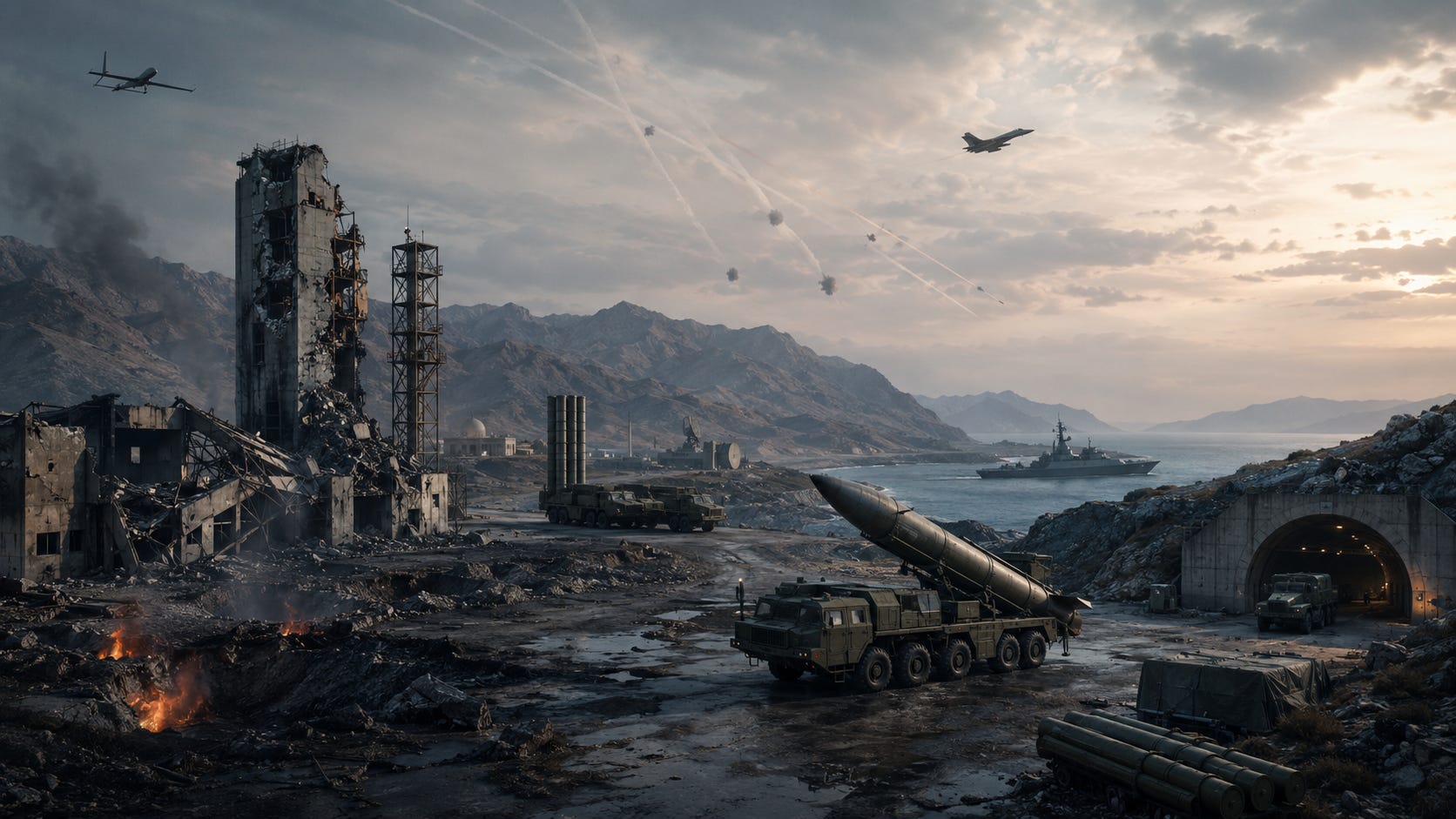
When we place the resources expended by the United States and Israel alongside the intelligence assessments reported in U.S. media, a clearer picture emerges: the attacks were heavy, but they were not crippling.
Shamsoddin ShariatiWhen Weeks of War Consume Years of Munitions ProductionOne of the important realities of the recent war is that the United States and Israel did not only strike Iran. To sustain the war effort, they also consumed a significant portion of their own critical, costly, and difficult-to-replace stockpiles…Read more4 days ago · Shamsoddin ShariatiAccording to the latest CIA-related classified assessments reported by The Washington Post, Iran still retains around 70 to 75 percent of its mobile missile launchers across the country. This figure matters because mobile launchers are among the hardest components of Iran’s missile capability to detect and destroy completely.
In the same context, The New York Times, citing newer CIA-related assessments, reported that Iran has preserved around 70 percent of its pre-war missile stockpile. In other words, despite the extensive attacks, the core of Iran’s missile capability has neither been destroyed nor rendered ineffective.
The New York Times also reported that Iran has restored operational access to 30 of 33 missile sites along the Strait of Hormuz, with only three sites remaining completely inaccessible. In addition, Iran has regained access to around 90 percent of its underground missile storage and launch facilities across the country—facilities that are now considered partially or fully operational.
This, of course, does not mean that the attacks were ineffective. Reuters, citing U.S. Central Command (CENTCOM), reported that more than 66 percent of Iran’s facilities for producing missiles, drones, and naval equipment, as well as its shipyards, were damaged or destroyed. Later reports, however, say that Iran has repaired some missile-production facilities, reopened storage depots, and resumed missile assembly. In the drone domain, Reuters also reported, citing a source, that only the destruction of around one-third of Iran’s drones could be confirmed.
A distinction must also be made in the naval domain. CBS reported that “a large part” of Iran’s conventional navy had been destroyed. Reuters, again citing CENTCOM, also reported that 92 percent of Iran’s large naval vessels had been sunk. At the same time, however, officials said that around 60 percent of the Islamic Revolutionary Guard Corps’ naval arm, including fast boats, remained—the very component that matters for asymmetric warfare in the Persian Gulf.
Regarding the air force, CBS also reported, citing officials, that around two-thirds of Iran’s air force remains operational. This means that even in an area where Iran is more vulnerable relative to the United States and Israel, nothing even approaching destruction has occurred.
Even on the nuclear issue, U.S. intelligence from the recent war indicates only limited new damage to the timeline for Iran’s nuclear program. The estimates have remained largely unchanged and still place the timeline for building a nuclear weapon, if Iran’s leaders decide to do so, at around nine months to one year.
The real picture, therefore, is that Iran has suffered damage, but has retained or restored a significant part of its missile, underground, drone, naval, and air capabilities.
The more important conclusion is that the United States and Israel consumed a vast quantity of scarce, expensive, and slow-to-replace munitions in order to degrade part of Iran’s military capability.
Such a situation is usually not the end of the calculation; it is the beginning of a new one. The next question is this: why, despite this attrition and high cost, does the risk of a renewed attack remain serious?
Thanks for reading! Subscribe for free to receive new posts and support my work.