 نسخه فارسی
What Gabbard’s Resignation Reveals About Trump’s Iran Policy
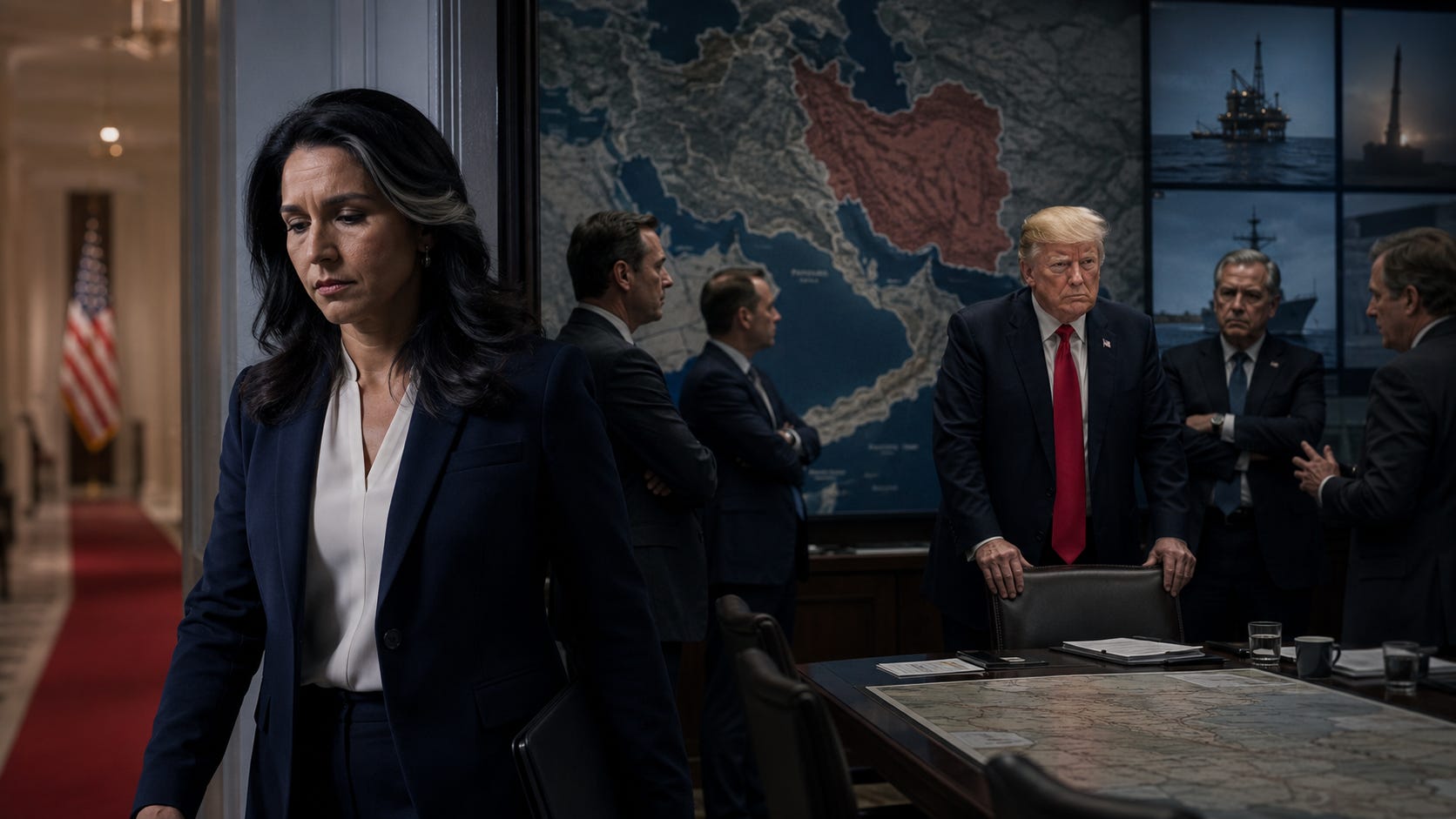
In Washington, a resignation is sometimes not merely a personnel change. It can signal which voices are being sidelined and which narratives are gaining the upper hand. Tulsi Gabbard’s resignation as U.S. Director of National Intelligence, against the backdrop of recent tensions, carries an important political message: Trump’s decision-making circle on Iran is becoming narrower, more aligned, and less tolerant of internal doubts.
Gabbard’s significance did not lie in the fact that she was a decisive actor in Iran policy. In fact, reports indicated that she had, in recent months, been sidelined to some extent from core national-security discussions. Her importance lay more in her symbolic and narrative role. Gabbard was not a classic figure of America’s hawkish camp. She had an anti-interventionist background, and even if she tried in recent months to align herself with Trump’s narrative, her presence at the head of the U.S. intelligence community remained a symbolic obstacle to building a complete and frictionless consensus for war.
This divide had already revealed itself before the 12-day war. In her March 2025 testimony before Congress, Gabbard said that the U.S. intelligence community’s assessment remained that Iran was not building a nuclear weapon. That position later drew a negative reaction from Trump, who openly said that Gabbard was wrong in this assessment.
Therefore, the central issue in the Iran file is not only whether the United States attacks again. The more important issue is how Washington explains such an attack, how it builds legitimacy for it, and how it connects political decisions to intelligence assessments. This is where the key questions arise: Was Iran really an imminent threat? Had war become inevitable? Did intelligence determine the course of the political decision, or was it used after the political decision to justify it?
Earlier, the resignation of Joe Kent, director of the National Counterterrorism Center, had brought this divide into the open. He said that Iran was not an imminent threat to the United States and that the war began under pressure from Israel and its lobby. The White House rejected this account, but the resignation itself showed that disagreement over the war with Iran did not exist only outside the Trump administration; part of this divide also existed within his own camp and the “America First” camp.
Now, with Gabbard’s departure—as she was considered one of Joe Kent’s close political allies—another figure who could have kept this divide alive is leaving the decision-making structure. The meaning of this development is clear: if the Trump administration again moves toward the military option, it will probably face less resistance within the security apparatus. Disagreements may remain, but their ability to be heard and exert influence will diminish.
For Tehran, the message of this resignation is important. In Washington, the voices that could raise questions about the cost of war, the intelligence basis for an attack, or the absence of an imminent threat are becoming weaker. This does not mean that an attack is certain; rather, it is a sign of the declining internal capacity to restrain war. In such an environment, discussion of the “reality of the threat” may be heard less, while emphasis on the “necessity of a decisive response” may grow stronger.
For this reason, Gabbard’s resignation should not be seen as a routine bureaucratic development. It is part of Washington’s political and security realignment at a sensitive stage of the Iran issue: a stage in which the failure of diplomacy may be translated into the language of force more quickly than before.
Gabbard was not the trigger for war, but her departure may signal that the brakes are weakening.
Thanks for reading! Subscribe for free to receive new posts and support my work.