 نسخه فارسی
Trump’s Iran Message: The Nuclear Issue Can Wait, Israel Cannot
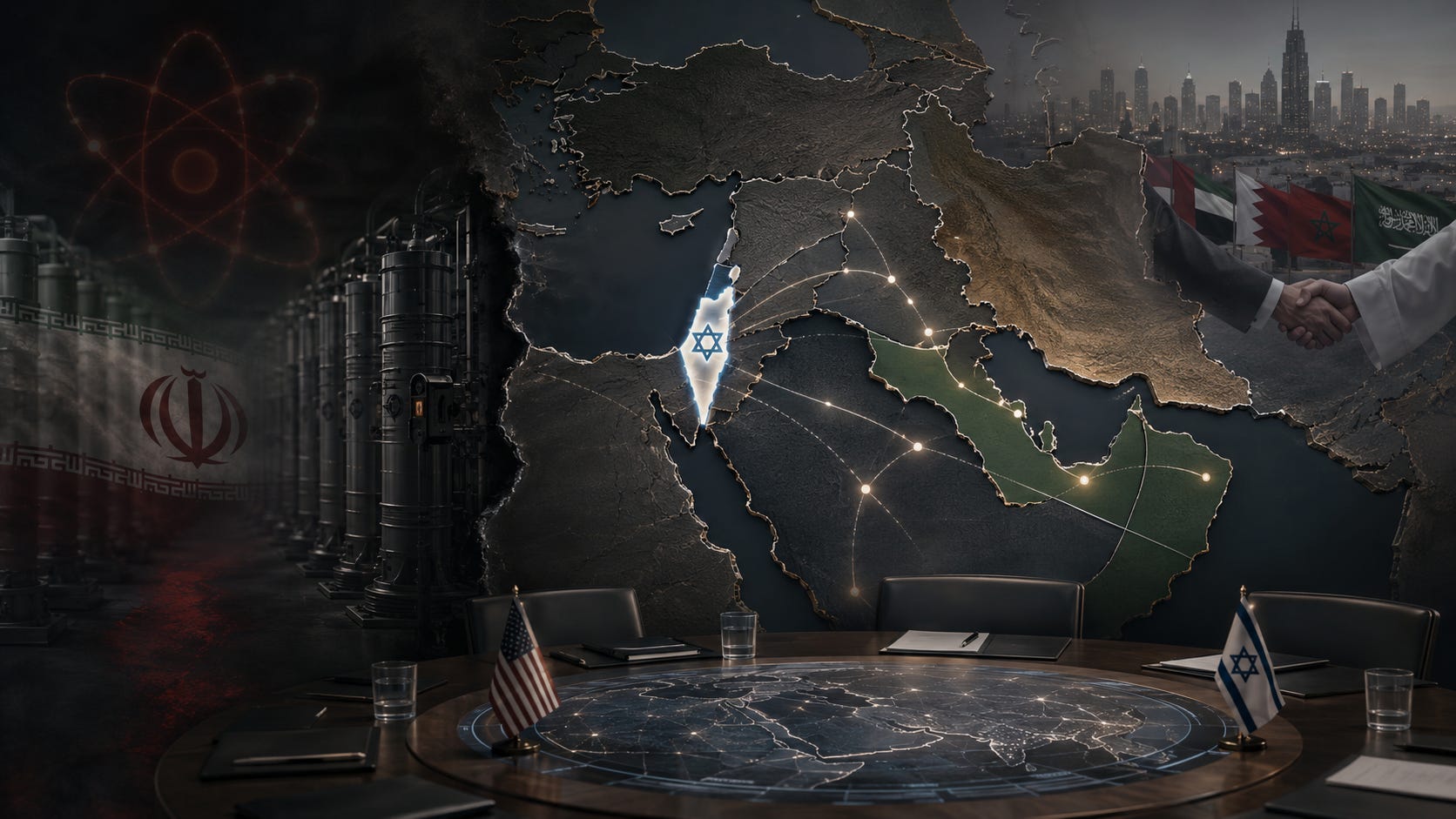
Trump’s message on Iran was an important political signal.
On the surface, he spoke of a good agreement with Iran, while also warning that, if no agreement takes shape, a return to war would be “bigger and stronger.” Yet the decisive part of the message was neither the threat of war nor the apparent optimism about negotiations. The central point lay elsewhere. Trump called on Saudi Arabia, Qatar, Pakistan, Turkey, Egypt, Jordan, and other countries to join the Abraham Accords—the framework whose main purpose is the normalization of relations with Israel and the consolidation of Israel’s regional position.
This is where one must pause.
According to published reports on the initial ceasefire framework, Iran’s nuclear issues are not expected to be resolved in the first stage. Sensitive nuclear matters, including the details of enrichment, uranium stockpiles, and monitoring mechanisms, will be deferred to subsequent negotiations. In other words, the nuclear file, at least at this stage, can be postponed. But what Trump is not willing to defer is the question of Israel.
Put more simply, Washington may accept an end to the war without a final nuclear agreement, but it does not want to end it without a strategic gain for Israel. This is precisely what takes Trump’s message beyond an ordinary political statement: the nuclear file can temporarily be deferred to the future, but Israel’s position in the regional order cannot.
This stands in serious tension with Trump’s official narrative of the war. He repeatedly tried to tie the war to the “threat of a nuclear bomb,” as if the entire crisis were only about uranium, centrifuges, and enrichment. But now, at the moment when ending the war and reaching a ceasefire are being discussed, he himself is showing that the central issue is not the nuclear file itself.
Other signs reinforce the same picture.
In the early days of the war, Marco Rubio explained that the United States knew Israel intended to attack and that Iran, in response, might target U.S. forces and Washington’s allies; therefore, the United States became involved preemptively. Even if later efforts were made to soften or reinterpret those remarks, their political meaning was clear: the rationale for U.S. involvement was tied to Israel’s regional ambitions.
The resignation letter of Joe Kent, the former director of the U.S. National Counterterrorism Center, also states explicitly that Iran was not an imminent threat to the United States and that the war began under pressure from Israel and its supporters. This statement came from within the very security apparatus that was supposed to justify the rationale for war.
From this perspective, the central question arises again: if the issue was really only keeping Iran away from a nuclear weapon, why did Iran’s unprecedented proposals in the Geneva talks fail to prevent the war?
According to the remarks of Oman’s foreign minister, Iran had put serious and unprecedented concessions on the table regarding the non-accumulation of enriched material, reductions in existing stockpiles, and full IAEA verification. At the same time, The Guardian’s report on the assessment of the UK National Security Adviser indicated that, in his view, an agreement in Geneva was not out of reach and that Iran’s proposal could have served as a basis for progress.
Therefore, if the diplomatic path could have significantly lengthened the time Iran would need to move toward a nuclear weapon, why was it not enough to prevent war?
The analytical error is to assume that the nuclear file was the full truth of the war. Trump’s recent message shows that, for Washington, ending the war does not depend only on extracting nuclear concessions from Iran. It must also help reshape the regional order in Israel’s favor. Otherwise, Trump threatens to return to war despite all the costs. This is why the Abraham Accords suddenly move out of the margins and become part of the logic of an agreement with Iran.
This is where the official narrative begins to crack.
If the issue had been entirely nuclear, nuclear concessions should have been enough to halt the war. But when the end of the war becomes tied to the Abraham Accords, it becomes clear that Washington’s primary objective is to consolidate Israel’s regional position.
This is the meaning of Trump’s message: the war was justified in the name of the nuclear bomb, but they want its ending to be recorded in Israel’s name.
Thanks for reading! Subscribe for free to receive new posts and support my work.