 نسخه فارسی
Temporary Relief, Strategic Containment: Washington’s Iran Policy
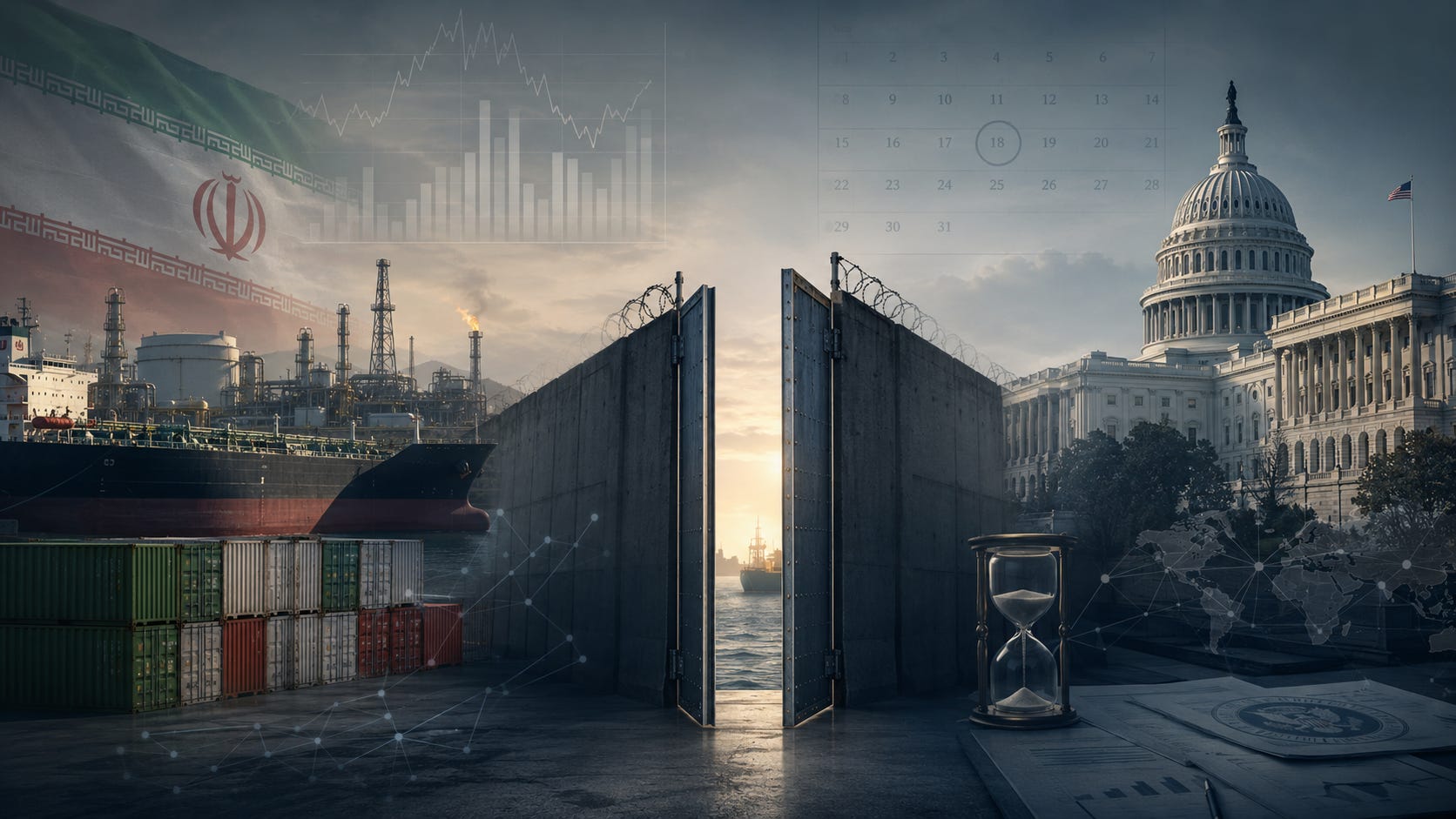
Less than three weeks were enough to expose the gap between the grand promises of the Islamabad MoU and the reality of U.S. policy. On June 21, Washington granted Iran a two-month sanctions waiver. On July 7, less than three weeks later, it revoked that waiver.
This reversal highlights a fundamental distinction: the difference between temporary sanctions relief and the acceptance of Iran’s durable integration into the global economy.
Thanks for reading! Subscribe for free to receive new posts and support my work.
The United States may temporarily grant Iran sanctions relief in order to halt a war, protect maritime security, calm energy markets, or advance negotiations. But that is fundamentally different from accepting Iran’s full and stable return to global financial, trade, and investment networks.
The real question, therefore, is whether the United States is prepared to accept Iran’s durable integration into the global economy, even if this results in the economic growth of a country capable of altering the balance of power in the Middle East.
The cases of China and Russia have made Washington more cautious in answering this question.
At the beginning of the new century, the United States assumed that integrating China into the global economy would turn it into a more moderate actor, more compatible with the existing order. China joined the World Trade Organization in 2001 and became one of the greatest winners of globalization. But China’s economic growth did not reduce geopolitical competition. Instead, it provided the resources needed to develop technology, expand military capabilities, and extend political influence. Rather than being absorbed into the U.S.-led order, China became its principal rival.
For years, Europe similarly hoped that extensive trade and Russia’s dependence on energy revenues from Europe would restrain Moscow’s behavior. Russia’s invasion of Ukraine demonstrated that economic dependence does not necessarily prevent security competition or war.
The lesson for the West was clear: economic integration does not guarantee that a rising power will abandon its geopolitical objectives. The same logic now shapes Washington’s calculations regarding Iran.
The disagreement between Washington and Tehran is not limited to Iran’s nuclear and missile programs or to human rights. The deeper issue is Iran’s position in the regional balance of power.
Iran is not comparable in scale to China, nor can it yet be described as the hegemon of the Middle East. Nevertheless, its proximity to the Strait of Hormuz, territorial size, population, energy resources, industrial infrastructure, missile and drone capabilities, and regional sphere of influence give it the potential to become a regional hegemon. From Washington’s perspective, this potential means that Iran’s economic growth is not merely a commercial matter. Greater financial, industrial, and technological resources would directly strengthen its power and influence in the region.
Iran’s full return to the global economy, therefore, would mean more than increased oil exports or an inflow of foreign investment. It would provide the financial and technological resources needed to expand Iran’s regional power. From Washington’s perspective, this is precisely the issue.
The United States may grant Iran limited sanctions relief, particularly when it needs Tehran’s cooperation to contain a crisis. But accepting a situation in which Iran can accumulate economic power without constraint and reshape the regional order more extensively is an entirely different matter.
Within the realist logic of international relations, this issue has a structural basis rather than being rooted primarily in the ideology of governments. Increased wealth and economic capacity usually strengthen a country’s political and military power as well. Rising powers, in turn, seek to consolidate a sphere of influence and shape their regional environment more closely around their own interests.
The United States is itself the hegemon of the Western Hemisphere. From a realist perspective, the emergence of a dominant power in another strategically important region of the world constitutes a security threat to the United States—whether that rival is China, Russia, or Iran.
For this reason, sanctions waivers, limited releases of assets, and conditional access to banking channels should be understood as bargaining tools, not as signs that the policy of containment has ended.
These concessions are granted when the United States seeks a specific objective in return: halting a conflict, reopening energy routes, limiting Iran’s nuclear program, or reducing its own security costs. But that is still far removed from U.S. acceptance of Iran’s full and durable integration into the global economy.
This analysis does not mean that negotiations or measures to ease economic pressure are pointless. Any sanctions relief or release of resources is vital to Iran’s economy. The mistake lies in treating a temporary waiver as evidence that strategic containment has ended.
The United States may grant Iran temporary sanctions relief in order to contain a crisis. But that does not mean accepting Iran’s growing power.
Thanks for reading! Subscribe for free to receive new posts and support my work.