 نسخه فارسی
Negotiation Without Trust: Why an Iran-U.S. Agreement Remains Out of Reach
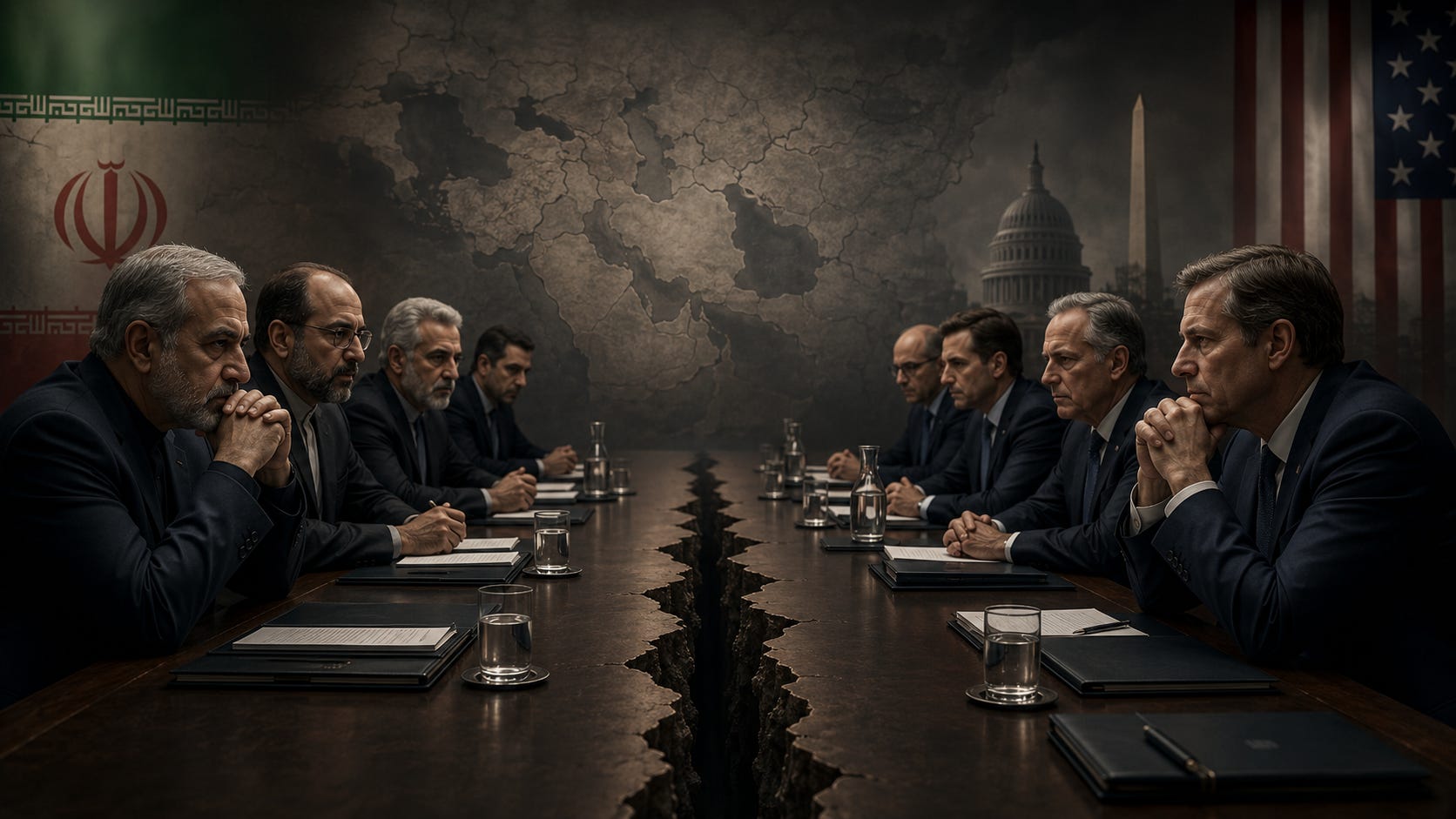
The main issue in Iran-U.S. negotiations is not merely that the two sides disagree over uranium enrichment, sanctions, the Strait of Hormuz, or frozen assets. The deeper problem is that neither side believes the other will honor its commitments after receiving concessions.
A genuine agreement is not possible without a minimum level of trust. Trust means that each side can be confident that, if it makes a concession, the other side will not turn that concession into the starting point for the next round of pressure. Without such confidence, every concession is seen not as part of a balanced agreement, but as “surrendering leverage.”
In a balanced agreement, the parties take confidence-building steps before reaching a final agreement. These steps are meant to show that the agreement is reciprocal, not a trap for extracting concessions and shifting the agenda.
Even in a simple transaction such as buying and selling a car, trust does not arise only between the buyer and the seller. The mechanic, the price assessor, the bank, the documentation, the law, and the possibility of legal recourse all help make the transaction reliable.
But in the international system, no such powerful overarching authority exists. There is no institution that can definitively bind the United States to its commitments or give Iran a guarantee that the concessions it makes will not later be used against it. This is where the central impasse becomes clear: neither side is willing to give up its leverage merely in exchange for the other side’s promises.
Iran is not prepared to give up enrichment, enriched uranium, control over the Strait of Hormuz, or its regional capabilities without a credible guarantee. The United States, in turn, is not prepared simply to give up sanctions, financial pressure, the maritime blockade, or the leverage of Iran’s frozen assets. The problem, then, is not only that the text of an agreement is difficult. The problem is that no one wants to take the “first step,” because both sides fear that this first step would mean losing leverage rather than beginning a reciprocal process.
Iran’s distrust of the United States is not merely a rhetorical position. At critical moments, Washington has repeatedly sent mixed signals, resorted to military action in the middle of diplomatic processes, and behaved in ways that have weakened the credibility of its commitments.
A recent example was the process surrounding Iran’s ten-point plan and the Islamabad talks. Trump initially declared, in order to persuade Iran to accept a ceasefire, that Iran’s ten-point plan could serve as an acceptable basis for negotiations. But when the talks reached the practical stage, a different agenda was placed on the table—one with little substantive connection to the original plan. When this experience is placed alongside Washington’s threats, mixed signals, and constant shifts in agenda, it is natural that Tehran sees no reason to trust U.S. promises.
On the other hand, the problem is not only Iran’s distrust. The more important issue is that Trump has no clear record of building win-win agreements based on confidence-building. He understands deals less through the logic of building trust than through pressure, threats, and extracting concessions.
Trump’s dominant pattern in foreign policy has been precisely this: raising the cost, placing the other side under pressure, and then presenting that side’s retreat as a “deal.” Many of his tariff agreements with Europe, Japan, South Korea, India, and other U.S. trading partners can be understood within this framework: pressure first, one-sided concession extraction afterward.
China, however, was an important exception. Beijing pushed Trump toward a more balanced deal when it refused to back down in the face of the tariff war and responded in kind, from imposing reciprocal tariffs to restricting exports of certain critical minerals. The result was less a one-sided victory for Trump than a kind of retreat from the initial pressure and a partial return to the previous position.
An agreement with Iran, if it is to be genuine and durable, cannot be built through the logic of unilateral imposition. In conditions of deep distrust, Iran will not give up its leverage merely in exchange for promises. Nor is the United States prepared to set aside its tools of pressure without receiving major concessions.
It is unrealistic to expect this version of Trump to voluntarily take the first confidence-building step unless, as in the case of China, he faces a serious cost on the ground and retreats. Nor can Iran be expected to give up its leverage, especially when it distrusts the United States and does not see itself as being in a position of weakness on the ground.
Therefore, the core problem lies not only in the clauses of a possible agreement, but in the logic governing the negotiations. As long as Washington confuses agreement with pressure aimed at forcing submission, negotiations may continue, but a genuine agreement will remain out of reach.
Shamsoddin ShariatiAn Agreement Out of Reach: Trump’s Tactical Pause Before the China TestDate of the original publication: 11 May 2026…Read more5 days ago · Shamsoddin ShariatiThanks for reading! Subscribe for free to receive new posts and support my work.