 نسخه فارسی
Iran’s Security Doctrine After October 7
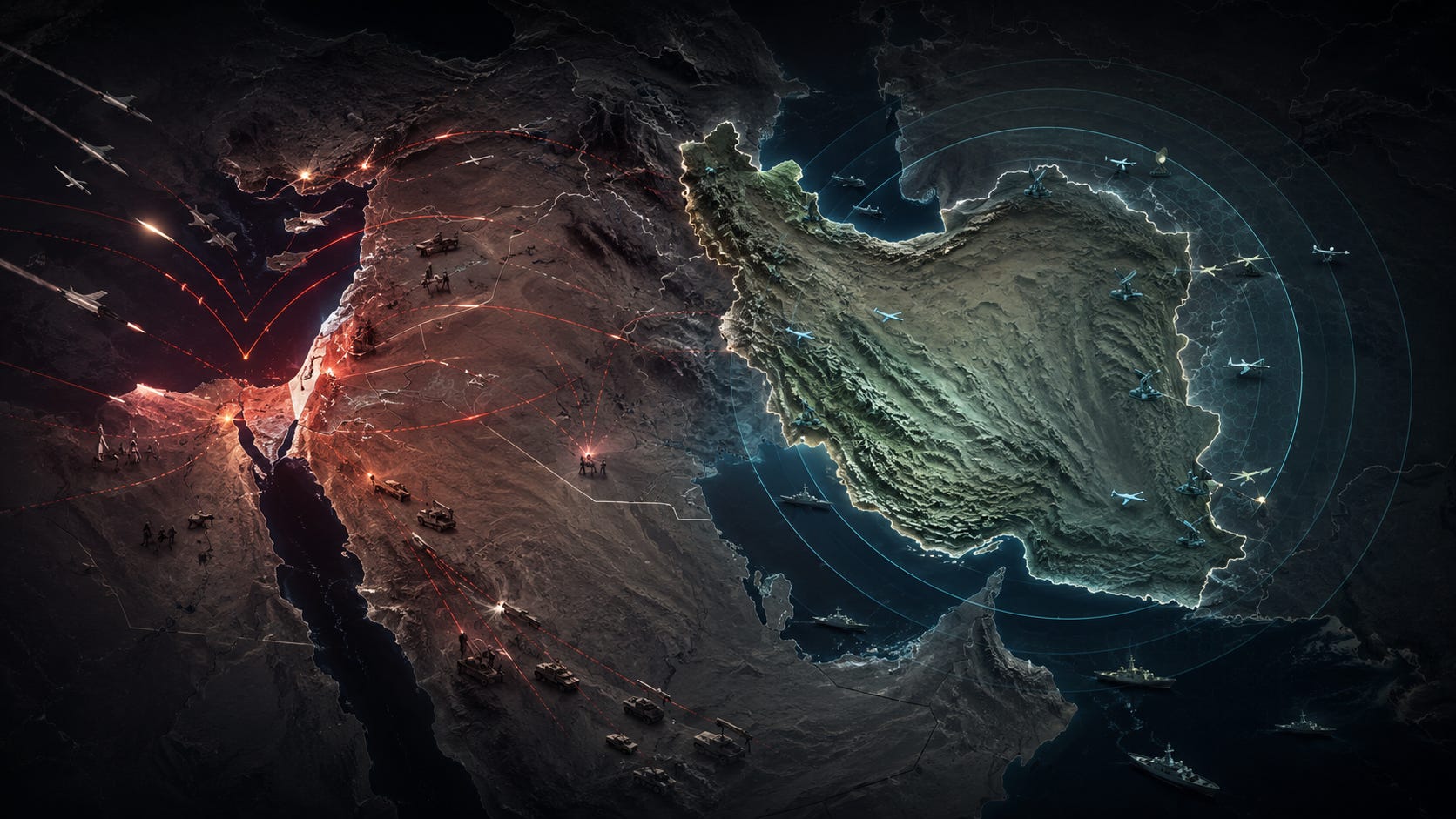
After October 7, Iran sought to preserve regional deterrence while keeping the crisis at a manageable level and avoiding escalation with the United States and Israel. By contrast, after the shock of October 7, Israel reached the conclusion that even potential threats had to be treated as imminent threats and targeted before they materialized.
What followed, therefore, was a clash between two security logics: crisis management by Tehran and preventive war by Tel Aviv.
Shamsoddin ShariatiIsrael’s Post-October 7 Security DoctrineIsrael took a different path from Iran after October 7…Read more4 days ago · Shamsoddin ShariatiThe starting point of this discussion is October 7 itself. So far, no evidence has emerged of prior knowledge or any role played by Iran or Hezbollah in planning the attack. U.S. intelligence reports, reports by media outlets such as CBS, ABC, and The Guardian, and even some statements by Israeli officials, all point to this conclusion.
Recent reports about the secrecy surrounding the planning of Hamas’s operation, as well as the letter attributed to Mohammad Sinwar to Hezbollah, also reinforce the same picture: October 7 was less the beginning of a coordinated regional plan by Tehran than a crisis that confronted Iran and its allies with a new situation.
If Iran’s objective had been to widen the war, the most natural course would have been Hezbollah’s full-scale entry into the conflict. But that did not happen. Hezbollah became involved in an attritional border confrontation, but for a long time it remained limited and controlled, and did not turn into a full-scale war.
Iran’s conduct in Operation True Promise I should also be understood within this same framework. That operation came after the attack on Iran’s consular building in Damascus—an attack that Tehran regarded as crossing a red line. Iran responded, but it calibrated its response around restoring deterrence and managing the level of escalation. Tehran’s message was that a direct attack on Iranian interests and forces would not go unanswered, but the response also showed Iran’s unwillingness to enter a full-scale regional war.
More precisely, Iran’s policy was a limited and calculated response aimed at deterrence.
The assassination of Ismail Haniyeh in Tehran was a more difficult test. From a prestige-related and security perspective, the incident could have led to an immediate Iranian response. But Tehran delayed its response. Various reports indicated that Iran had factored into its calculations the risk of falling into the trap of regional war as well as the possibility of progress in the Gaza ceasefire talks.
This delay was one of the important signs of the logic of crisis containment. It is at this point that Pezeshkian’s remarks in New York take on particular significance.
On September 25, 2024, Masoud Pezeshkian said in his speech to the UN General Assembly that Iran had no intention of going to war with any country and that, if the West returned to its JCPOA commitments, Tehran would also be prepared to discuss “other issues.” In a meeting with Western journalists, he also said that Iran was prepared to lay down its weapons if Israel did the same. These messages were reflected in major international media outlets, including The Guardian and Bloomberg, as signs of Tehran’s readiness to reduce tensions.
These statements were made only two days before the assassination of Hassan Nasrallah. In other words, precisely at the moment when Tehran was officially sending a message of crisis containment, dialogue, and avoidance of war, Israel moved toward a strike that changed the entire equation of Iran’s regional deterrence.
The assassination of Hassan Nasrallah was a direct blow to Tehran’s regional deterrence architecture. From this perspective, Operation True Promise II should be understood as an operation that sought to restore Iran’s deterrence while controlling escalation and preventing the war from widening.
Alongside these on-the-ground and diplomatic indicators, the FATF issue is also highly significant.
The renewed consideration of the Financial Action Task Force (FATF) in the Expediency Discernment Council, with the approval of Iran’s Supreme Leader, was not merely a financial decision. The main sensitivity surrounding Palermo and CFT lay precisely in the fact that domestic opponents argued that accepting these bills could restrict channels of financial support linked to Iran’s regional allies.
Therefore, the serious return of the FATF issue to the agenda, the approval of the Palermo Convention bill in April–May 2025, and the subsequent approval of CFT in September–October 2025 at the highest levels of the system were important signs. This process showed that, in order to reduce international pressure and open channels for economic breathing space, Iran was prepared to show flexibility even in one of the most sensitive areas linked to its regional network.
This should also be considered alongside Iran’s legal-diplomatic conduct at the United Nations. Although Iran, at the political level, still does not accept recognition of Israel or the two-state solution, in UN votes it has supported resolutions that refer to the peaceful resolution of the Palestinian question within the framework of a two-state solution.
Of course, this does not mean a fundamental change in Iran’s political position. But it does show that Tehran’s legal-diplomatic conduct does not always correspond to the maximalist and rigid image of its regional policies.
Thanks for reading! Subscribe for free to receive new posts and support my work.