 نسخه فارسی
Iran’s New Post-War Doctrine: Consolidating a Sphere of Influence
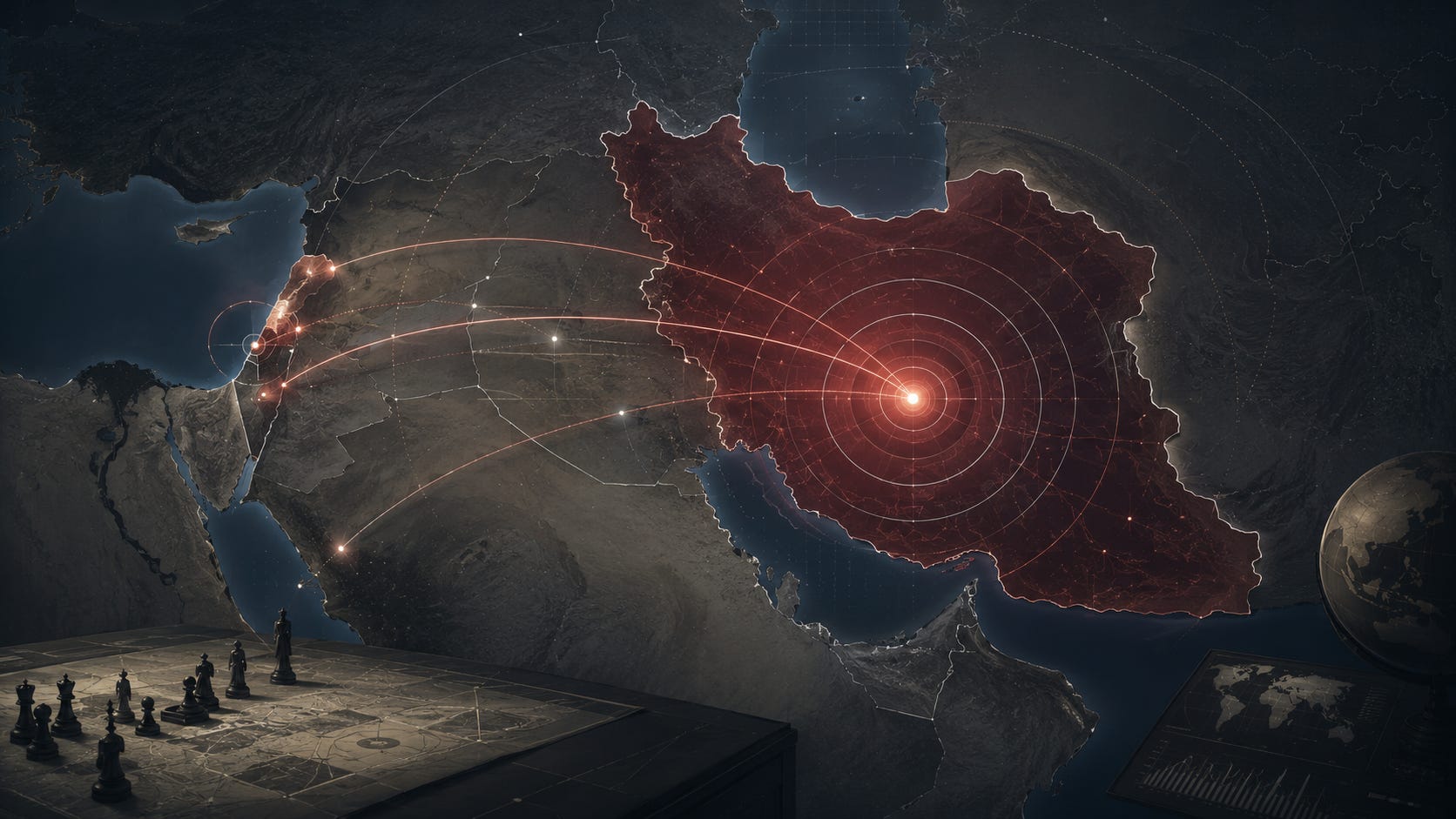
On February 28, 2026, Iran was targeted by a combined U.S.-Israeli offensive operation, at a moment when its foremost concern was defending its own existence and survival. Yet a few months later, that same Iran had reached a level of confidence that allowed it to launch a direct preemptive strike against Israel, even though Iranian territory had not been subjected to a new attack. More importantly, in the Islamabad Memorandum of Understanding, the United States extended the ceasefire to Lebanon as well, bringing the link between Lebanon’s security and the Iran-U.S. equation into a formal document.
This signaled a change in Iran’s security logic. Iran’s defensive doctrine, which had been based largely on responding to direct aggression against Iranian territory, reached a point at which an attack on its sphere of influence and security perimeter could also trigger a direct Iranian response.
To understand this shift, one must begin with the concept at the center of this transformation: the sphere of influence.
Sphere of Influence: From Claim to Consolidation
In realist theory of international relations, a sphere of influence is a region in which a power defines its overriding security interests and forces others to factor a serious response and significant cost into any intervention there.
But a sphere of influence is not created by political declaration alone. It must be consolidated. Its consolidation requires three conditions. First, the claimant power must show that it is genuinely prepared to pay a price to defend it. Second, the rival must take that cost seriously and adjust its behavior accordingly. Third, this reality must be translated from the battlefield into formal politics; in other words, the main rival must be forced to include it in a formal document or arrangement.
Before this war, Iran had not reached the point of consolidation in any of these three stages. Iran’s influence in Lebanon was a political and security reality, but it was not clear how far Tehran would go in directly defending it. It was not clear whether Israel and the United States took this threshold seriously. Nor had this sphere of influence found any place in a formal mechanism between Iran and the United States.
The developments of the war changed all three issues.
June 7: Shifting the Threshold of Response
The turning point came on June 7, 2026. Israel attacked southern Beirut: an attack limited in terms of its immediate target, but significant in terms of its strategic message. Until then, Israel could assume that an attack on Beirut, even if met with Tehran’s objection, would not necessarily trigger a direct Iranian response.
Iran shattered that assumption.
In response, Tehran launched a large-scale missile attack against Israel, even though Iranian territory had not, at that point, been subjected to a new attack. This was not a response detached from the context of the war. It was a response to an Israeli attack on a front that Iran considers part of its strategic security.
The main difference from previous responses lay precisely here: the threshold of response shifted from an “attack on Iranian territory” to “aggression against Iran’s security sphere and regional sphere of influence.” Iran showed that defending Lebanon was not merely a political or rhetorical position for it; at a certain level, it was an issue for which Tehran was prepared to pay a direct military cost.
This marked a transition from territorial deterrence to extraterritorial deterrence. Iran was no longer only raising the cost of attacking itself; it was also raising the cost of attacking its sphere of influence. This is the first condition for consolidating a sphere of influence.
When the Rival Changes Its Calculation
But paying a cost is not enough on its own. The second condition is that the rival must take that cost seriously and adjust its behavior accordingly.
After Iran’s attack, the United States did not participate in Israel’s air defense against that specific strike. It then did not intervene in Israel’s counterattack either. After Iran’s second missile response, Israel, under U.S. pressure, did not continue the cycle of retaliation.
This sequence showed that attacking Lebanon is no longer a low-cost, local action. Any operation on this front can activate a direct Iranian response, increase the risk of a wider war, place Israel’s security under pressure, and pull the crisis back toward Hormuz and the energy markets.
What worked for Iran was a combination of missile capability, the capacity to extend the costs of war to other fronts, Iran’s position at a global energy chokepoint, and a readiness to cross an escalation threshold that Israel and the United States had previously considered unlikely.
The Islamabad MoU: Translating Battlefield Reality into the Text of the MoU
In realist literature, the highest level of consolidation of a sphere of influence occurs when battlefield reality enters formal politics. Powers do not reflect a new reality in formal agreements as long as they are able to ignore it. But when they are forced to incorporate it into a political or security mechanism, it means they can no longer ignore new realities and act on the basis of the previous order.
The first clause of the Islamabad MoU is important from this perspective. It extends the end of operations to all fronts, including Lebanon, and commits the parties and their allies to refrain from hostile action, threats, and the use of force.
Lebanon’s inclusion in the Iran-U.S. MoU means that the security of this front is no longer separate from the relationship between Tehran and Washington. If Israel conducts operations in southern Lebanon after this point, from Iran’s perspective it has not merely initiated a local conflict; it has violated a mechanism that the United States has also accepted by signing the MoU. In effect, Washington has recognized Iran’s right to use force against Israel in Lebanon. Iran’s response to an Israeli violation of the ceasefire in Lebanon would not be the start of a new war, but an attempt to restore an order that the other side has also signed onto.
This is the point at which Iran’s extraterritorial influence turns from an operational reality into a formally recorded political reality.
To understand the importance of this stage, one can look to historical examples. The Yalta Agreement in 1945 divided Europe between the United States and the Soviet Union and formalized both sides’ spheres of influence. On a completely different scale and under very different conditions, the Islamabad MoU contains a similar mechanism.
From Crisis Containment to the Consolidation of a Sphere of Influence
Within this framework, Netanyahu’s statement after the June 7 attack takes on a different meaning. He said Iran was trying to consolidate a new equation in the region and that Israel had prevented it. But an equation that Israel’s main ally is forced to include in an MoU has not been stopped; it has entered the stage of consolidation.
A comparison between Iran’s position on February 28 and its position after the Islamabad MoU shows the depth of this change. At the start of the war, Iran was in a position of defending its own survival. Its regional influence existed, but the threshold for directly defending it was unclear; the adversary had not adjusted its behavior to it; and the United States had not accepted it within any formal framework.
A few months later, all three conditions had changed: Iran had gained the confidence to carry out a direct preemptive attack on Israel beyond its own borders in defense of its sphere of influence; Israel and the United States were forced to factor the cost of this response into their calculations and refrain from escalating; and the first clause of the MoU incorporated Lebanon into the mechanism for ending the Iran-U.S. war as part of Iran’s sphere of influence.
J.D. Vance’s comment addressed to Israeli critics of the MoU also makes sense in this context. He said, “They need to wake up and see the reality of that country’s situation.” The reality Vance was calling on Israel to see is the same emerging order that Iran imposed on the United States and Israel on the battlefield and that was reflected in the Islamabad MoU: an order in which Lebanon is treated as part of Iran’s sphere of influence, the security of Hormuz cannot be managed without an arrangement with Tehran, and the United States has been forced to include both realities in the Islamabad MoU.
This development does not mean that Iran’s sphere of influence is now unchallenged or permanently consolidated. Real consolidation requires repetition, durability, and transformation into a stable rule in the behavior of regional actors. But a fundamental transformation has occurred: the doctrine of crisis containment and avoidance of direct confrontation has given way to a doctrine of extraterritorial defense and the consolidation of a sphere of influence.
The Islamabad MoU cannot be properly understood without grasping this transformation.
Thanks for reading! Subscribe for free to receive new posts and support my work.